
Brazil’s Data Center Push Hinges on Gas Rules, Grid Access and a New Congress

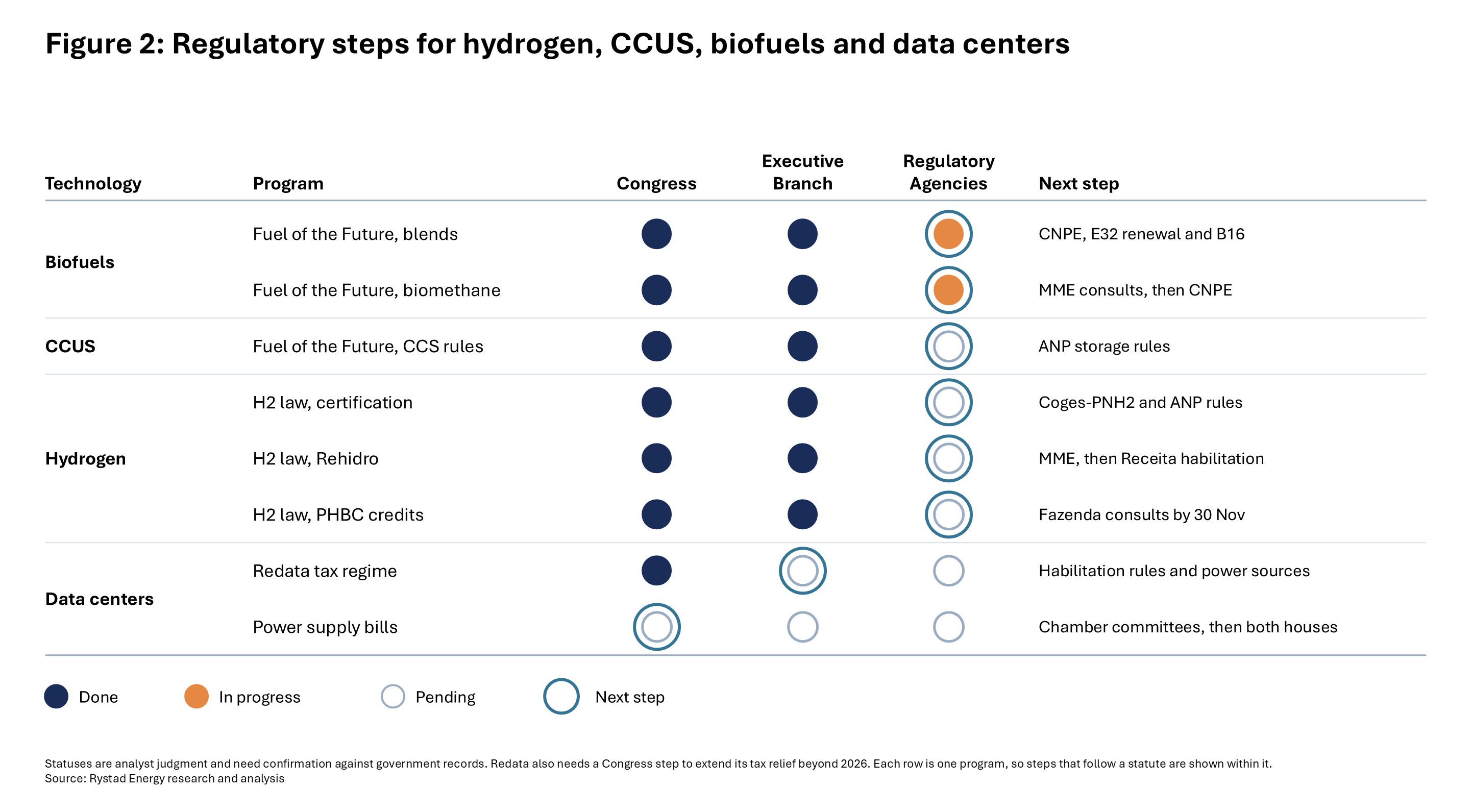
With the election settled, the presidency continuing for four more years and a newly elected Congress taking office in February, Brazil’s data center policy now hinges on execution, requiring tight coordination between parliament and the executive branch. Most clean tech policies can advance through decrees and agency rules, but data centers are an exception: Unlocking hyperscale investment requires Congress and the executive branch to align statutory tax incentive deadlines with regulatory definitions that are still to be written.
At the center is the Redata tax regime (Law No. 15,504/2026), enacted in September to position Brazil as a premier hub for high-performance computing and artificial intelligence. For investors seeking to deploy hyperscale infrastructure, its tax exemptions are neither automatic nor permanent: They are time-bound and contingent on meeting strict operational criteria. Still pending are the executives’ decision on whether natural gas generation qualifies as low-emission power, and critical details on energy-efficiency metrics, local-content requirements and compliance verification.
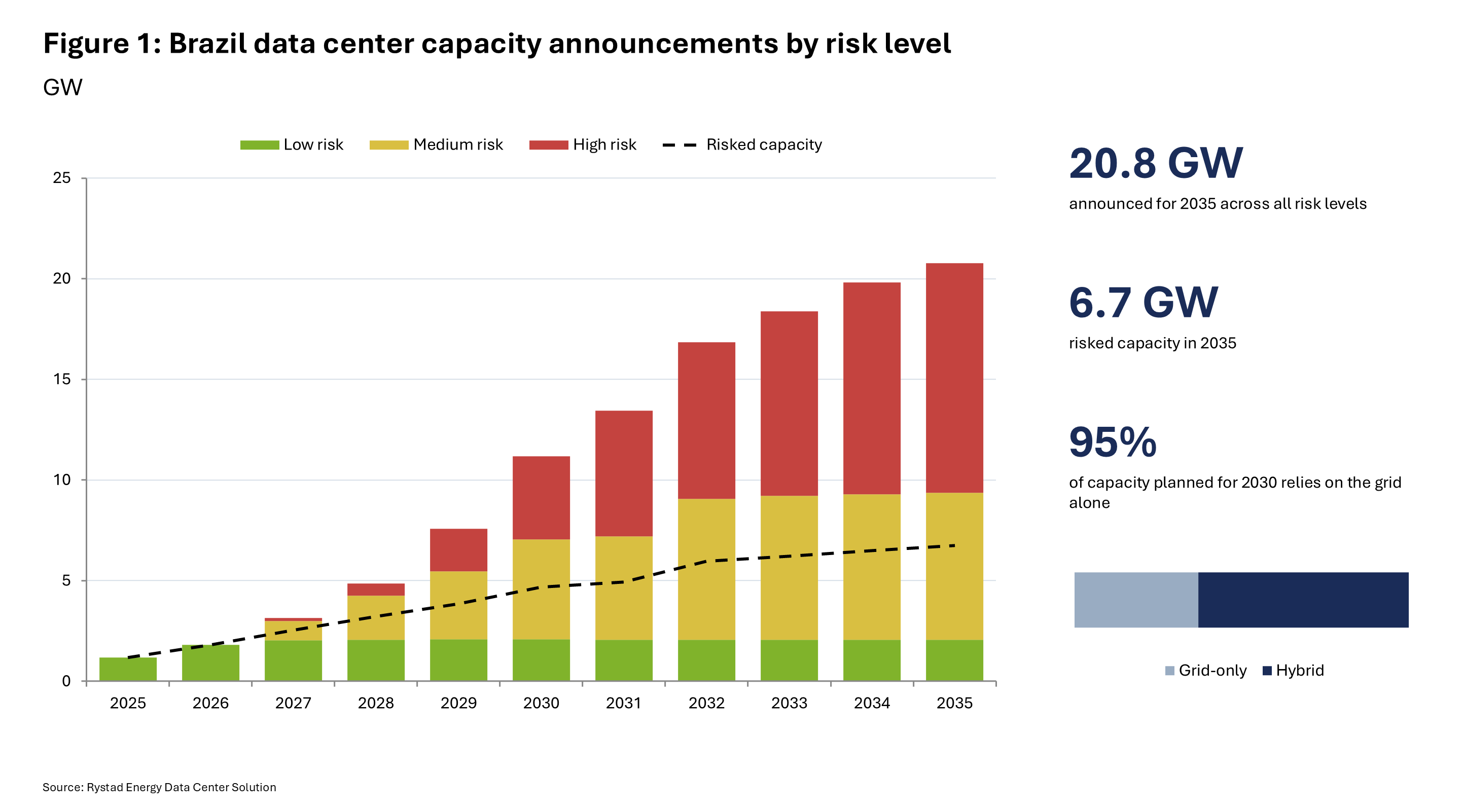
Rystad Energy’s risk assessment reflects this uncertainty, cutting Brazil’s announced data center pipeline by roughly two-thirds, from 21 GW to about 7 GW. Our risk modeling also factors in severe grid congestion and limited access to reliable power, which raise the country’s risk profile for data center development.
Requires Congressional action and executive coordination
ADVERTISEMENT
Handled solely in the executive branch and agencies (no Congress required)
By Marina Domingues, Head of US New Energies Research, via Rystad Energy
This post appeared first on https://oilprice.com