The Billionaire’s Paradox: Bill Gates and the Lucrative Business of Trash
When Bill Gates took the stage at the 2015 Paris climate summit, he appeared every bit the visionary philanthropist. Standing alongside President Barack Obama, he pledged billions toward breakthrough green technologies, positioning himself as a driving force in the global effort to avert environmental catastrophe. From geothermal energy to carbon capture, Gates championed a future defined by innovation and aggressive emission cuts, urging other wealthy leaders to follow his example of putting capital toward a livable planet.
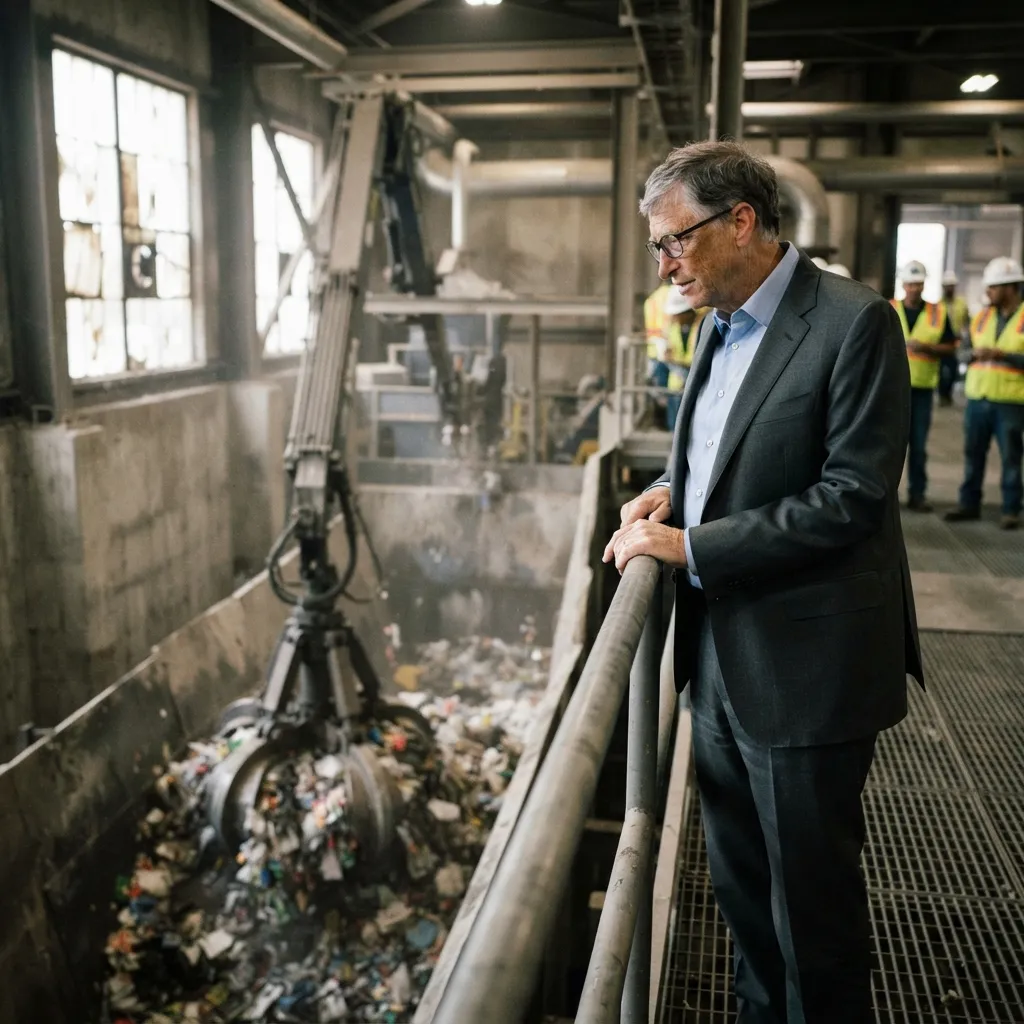
However, beneath this polished image of a climate crusader lies a massive financial contradiction. While Gates publicly funds high tech solutions for tomorrow, he has spent decades quietly profiting from one of today’s dirtiest industries. An investigation reveals that Gates is the dominant shareholder in Republic Services, the second largest landfill operator in the United States. His stake in the company has grown to roughly 38 percent, creating a windfall valued at approximately 29 billion dollars and netting him billions in dividends.
The conflict becomes stark when considering the atmospheric impact of these investments. Landfills are significant sources of methane, a greenhouse gas far more potent than carbon dioxide, and Republic Services produces as much annual pollution as millions of gasoline powered cars. Despite his immense influence and presence on the board through close associates, Gates has not pushed Republic to adopt ambitious emissions goals similar to those of its competitors. Instead, the company has faced federal citations for leaking methane and has actively lobbied against policies designed to keep organic waste out of landfills entirely.
This duality appears to be a byproduct of an older financial strategy rooted in safety rather than sustainability. Years before Gates became preoccupied with global warming, his money managers were instructed to move wealth out of volatile Microsoft stock and into boring, reliable assets_like trash collection_. For decades, garbage proved to be a goldmine precisely because it was constant and predictable. Now, as Gates maintains his role as a premier voice on climate disaster prevention, critics suggest there is a glaring gap between his public advocacy for the earth and his private appetite for profit from polluting infrastructure.